Stoves are the workhorses of Spokane home heating, and they get serviced like workhorses: pulled forward, connector pipe brushed separately from the flue, baffle checked, gaskets tested, firebrick inspected — because a stove run daily is a system under real load.
Reasons to schedule this service
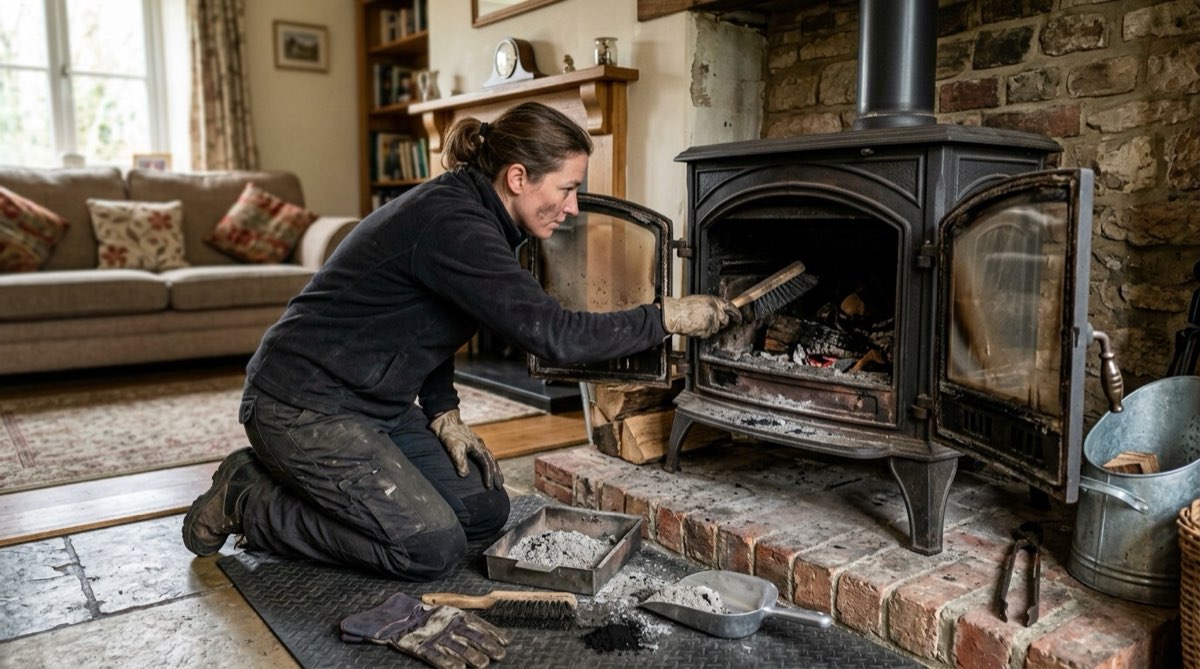
Schedule service before the stove becomes part of daily heat if these sound familiar:
- the stove starts slowly or smokes when the door opens
- wood smoke spills into the room during reloads
- the stove ran hard last winter and has not been checked since
What matters for Spokane properties
A primary-heat stove here can push two or three cords of pine and fir through one firebox each winter, much of it overnight on restricted air. That is the exact recipe for connector creosote, which is why heavy burners get a monthly flashlight rule and, some years, a midwinter cleaning on top of the fall one.
What changes the estimate for this visit
- stove model
- connector pipe layout
- burn habits
- chimney height and draft history
- clearances and visible wear
How the work usually goes
Stove service follows its own sequence:
- Appliance And Access Review: We ask how the stove is used, what wood is burned, and when smoke or slow draft happens.
- Flue And Exterior Inspection: The stove interior, baffles, connector pipe access, visible flue path, and exterior termination are reviewed.
- Cleaning Or Repair Plan: We decide whether cleaning, draft diagnosis, gasket attention, or a separate inspection is the right next step.
- Sweep Repair Or Vent Work: The accessible stove and vent path are cleaned with dust control matched to the setup.
- Draft Leak And Safety Review: We explain what burn habits may reduce buildup and what should be watched before heavy winter use.