When buildup has hardened into stage-two flake or stage-three glaze, a standard sweep is not enough — this service is the escalation. Glaze gets broken out with rotary chains and whips or softened with a chemical treatment applied across several burns, then swept clean.
Reasons to schedule this service
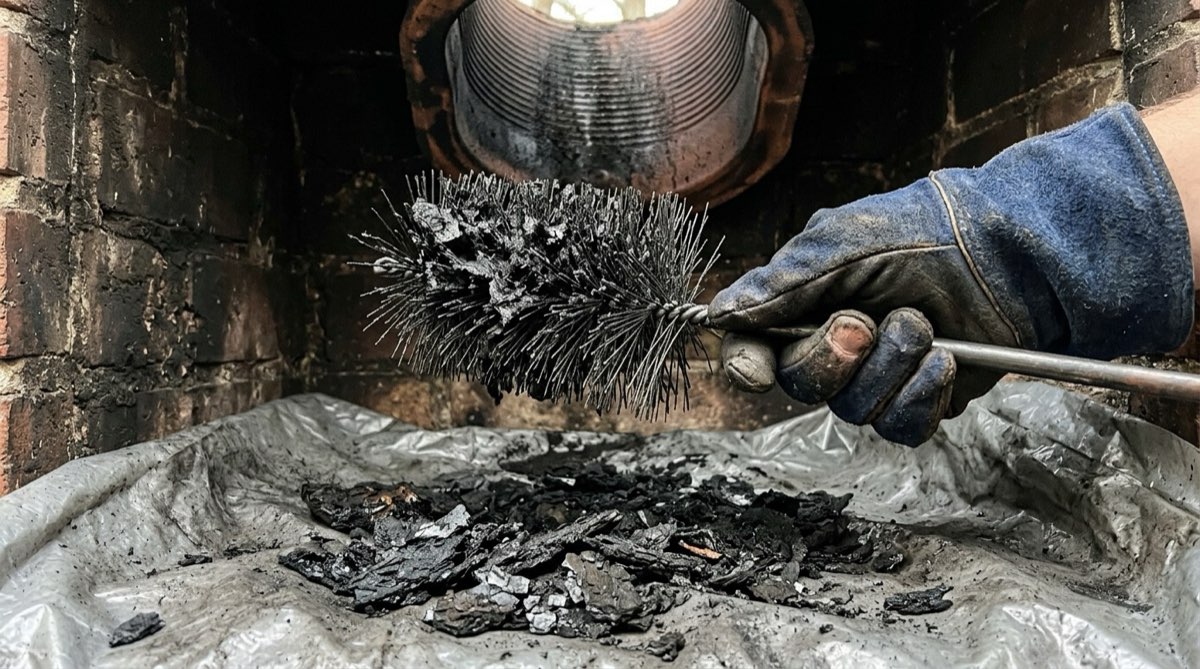
Call before using the chimney again if these signs are present:
- black shiny buildup is visible near the damper or flue opening
- the chimney history is unknown and the fireplace smells sharp or smoky
- smoke behavior changed after a season of slow, cool fires
What matters for Spokane properties
Pine is the reason Spokane sees more glaze than most markets: resinous smoke plus damped-down overnight stove burns lay it in fast. The removal visit should end with the honest conversation about fuel — a year of seasoning and hotter fires — because glaze that gets removed without changing the inputs is back by the next winter.
What changes the estimate for this visit
- creosote stage
- fuel moisture
- burn pattern
- flue size and liner surface
- inspection findings after loose material is removed
How the work usually goes
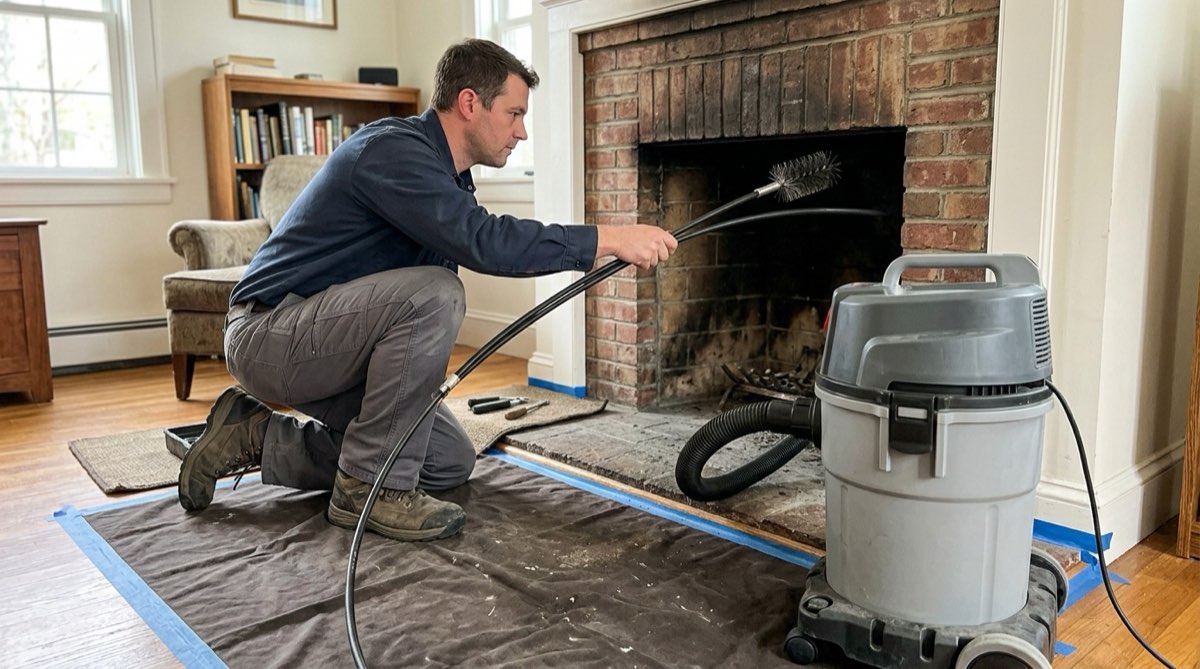
Heavy removal is staged work:
- Appliance And Access Review: We ask what wood you burn, how the fireplace or stove is run, and when buildup was first noticed.
- Flue And Exterior Inspection: The firebox, damper area, visible flue, cap, and roof access are reviewed before choosing a cleaning method.
- Cleaning Or Repair Plan: We explain when standard sweeping is reasonable and when heavy glaze needs a different conversation.
- Sweep Repair Or Vent Work: Loose soot and removable deposits are cleaned with dust control and tools matched to the liner.
- Draft Leak And Safety Review: You get plain guidance on safer burn habits and whether another inspection step is needed.