Spokane winters arrive with intent — one week it is crisp October, the next there is snow on the roof that stays until March. Everything on this list is easier, cheaper, and safer done before that switch flips.
Service first, before the rush and the snow
Book the sweep and inspection by early fall. Waitlists stretch as the first cold hits, and once the roof is under snow and ice, top-down work slows or waits for a thaw. A pre-season visit clears the summer's collection — humidity-caked soot, the odd nest — and proves the damper before you need it nightly.
Eyes on the top while you can still see it
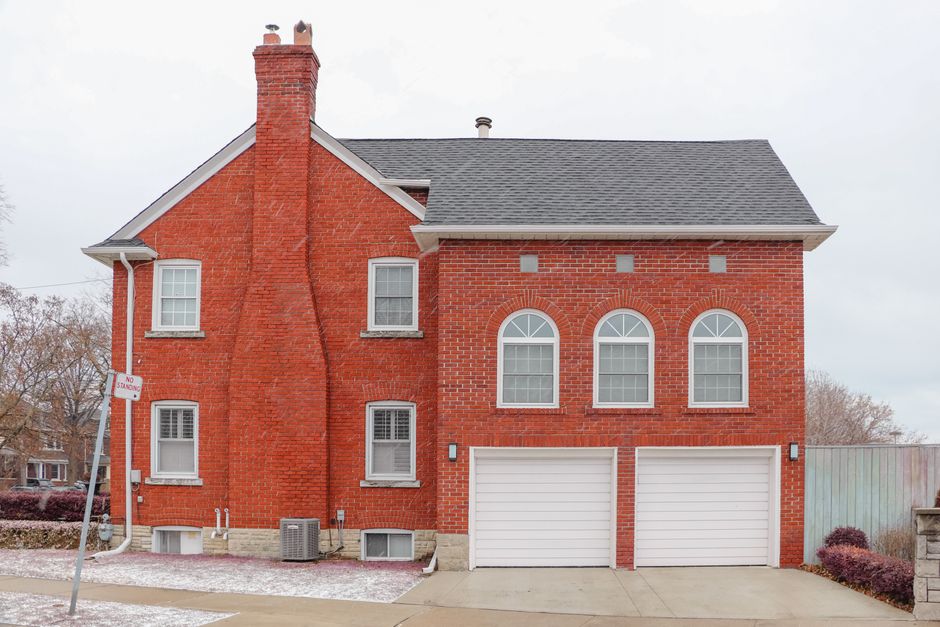
Before snow hides everything: binoculars on the cap (present, straight, screen intact), the crown (visible cracks), the flashing (lifted edges), and the brick (spalled faces, white staining). Summer storms and last winter's ice both leave marks worth fixing in October.
Wood, stove, and the vents nearby
Pine needs a full year seasoned — this fall you burn last fall's splitting. Stack off the ground, cover the top, leave sides open to the wind; a moisture meter under 20 percent is the pass mark.
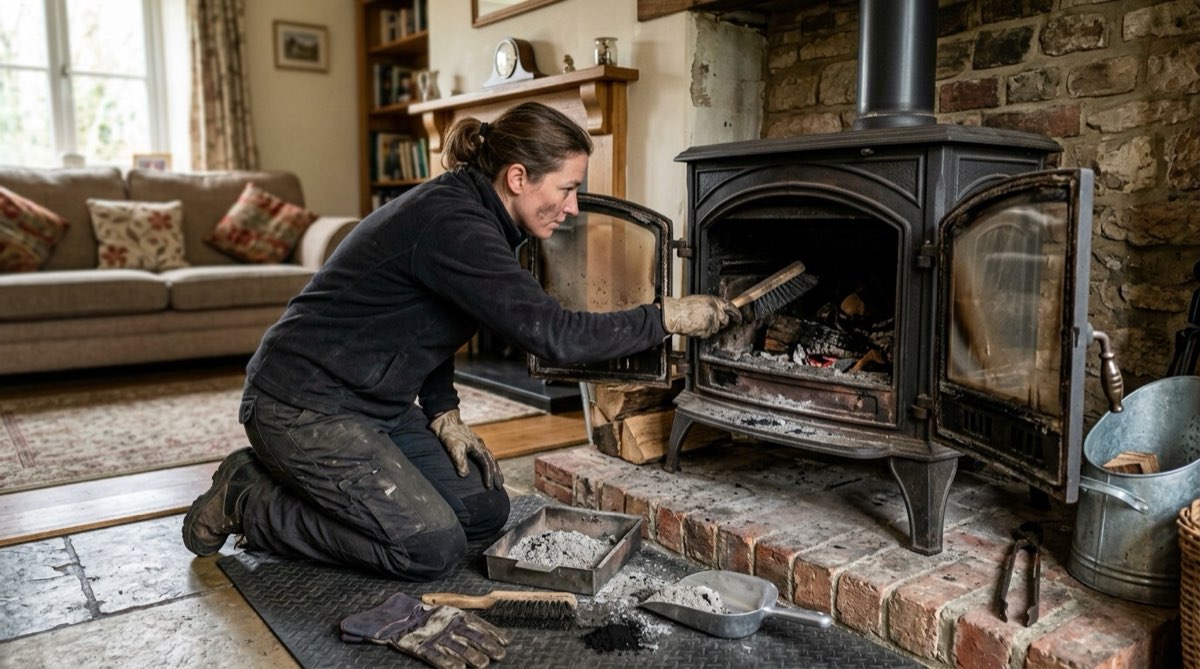
Stove owners: door gasket (dollar-bill pull test), firebrick, ash pan. And while a company is on the ladder anyway, the dryer vent is the same trip — lint is a winter fire risk with its own statistics.
Run one fire you don't need
A small, hot shakedown fire on a mild afternoon: steady rise, smell fading as the flue warms, a clean stream at the cap outside. Any smoke in the room, lingering tar odor, or leakage below the cap gets fixed in October comfort instead of January urgency.
The whole list in five lines
Book the sweep by September. Binocular-check cap, crown, flashing, and brick before snow. Verify the wood is last year's, dry, and covered. Test the stove gasket and clear the ash. Burn one small shakedown fire in October and watch it work.
Everything on that list costs less in fall than the same item costs in February — and some of it can only be done before the snow.