The standard is simple: every flue inspected once a year, cleaned whenever there is measurable buildup. What varies is how fast a flue gets there — and a Spokane wood stove eating pine through a six-month heating season gets there fast.
The annual floor, even for weekend burners
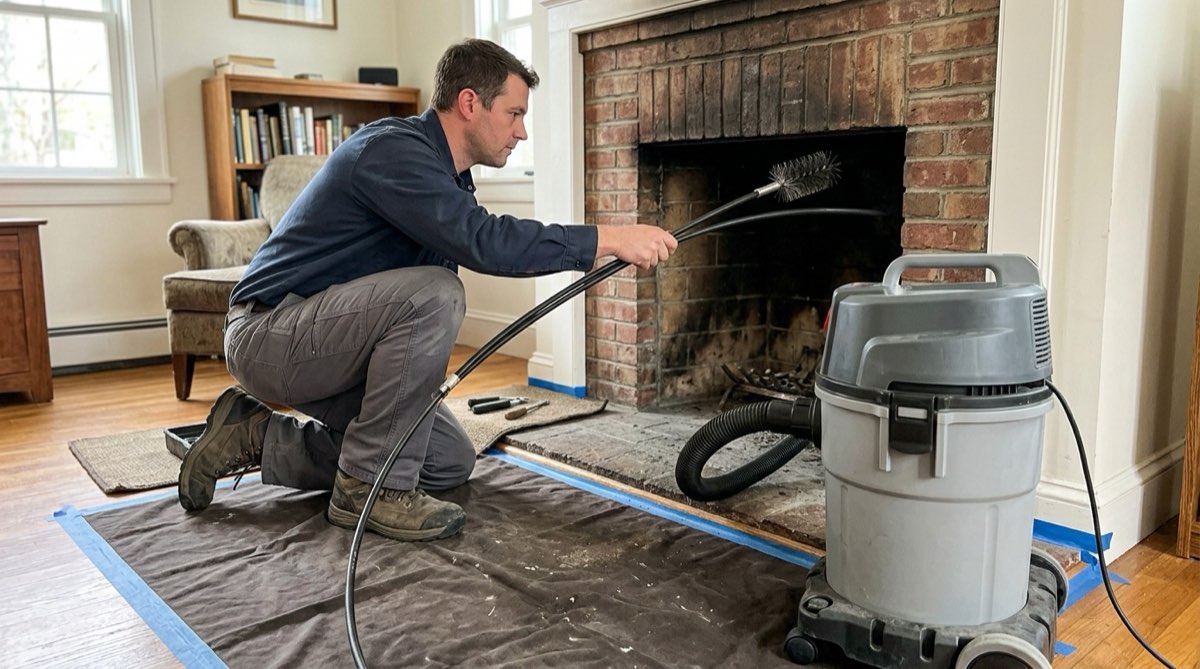
Light use does not exempt a chimney from weather and wildlife. Caps take storm damage, crowns crack through freeze-thaw, and swifts and squirrels treat open flues as spring real estate. The yearly look catches all of it.
It also catches the surprises light burners create themselves — the holiday season of wrapping paper and wet birch does more damage than people expect.
Heavy stove use is its own calendar
Homes heating primarily with wood — common across Spokane County — push one to three cords through a stove each winter. At that volume, plan on the fall service plus a realistic chance of a mid-season cleaning, particularly if pine is the main fuel.
Monthly during burning season: flashlight up the connector pipe. It is the earliest warning system you can get for free.
Signals that trump the schedule
Sluggish draft, glass blackening fast, tar smell on warm days, flakes in the firebox — each one moves the cleaning up, whatever the calendar says.
The rhythm that works here
August or September: inspection, cleaning if warranted, before the fall waitlists. Mid-winter: the five-minute connector check each month, and a second visit for heavy burners the years it is earned. That cadence keeps a pine-country flue boring — which is the goal.
Build the habit once
Put the inspection on the calendar for the same late-summer week every year and stop deciding annually — decisions are where maintenance dies. Heavy burners add the monthly connector glance from November through March.
The flue that gets this treatment never stars in anyone's insurance claim. Boring is the whole point.