Creosote comes in three escalating forms, and the difference decides whether your next sweep visit is routine or a project. Spokane's pine-heavy woodpile means flues here skip ahead a stage faster than hardwood country — worth knowing before winter locks in.
Know the three forms
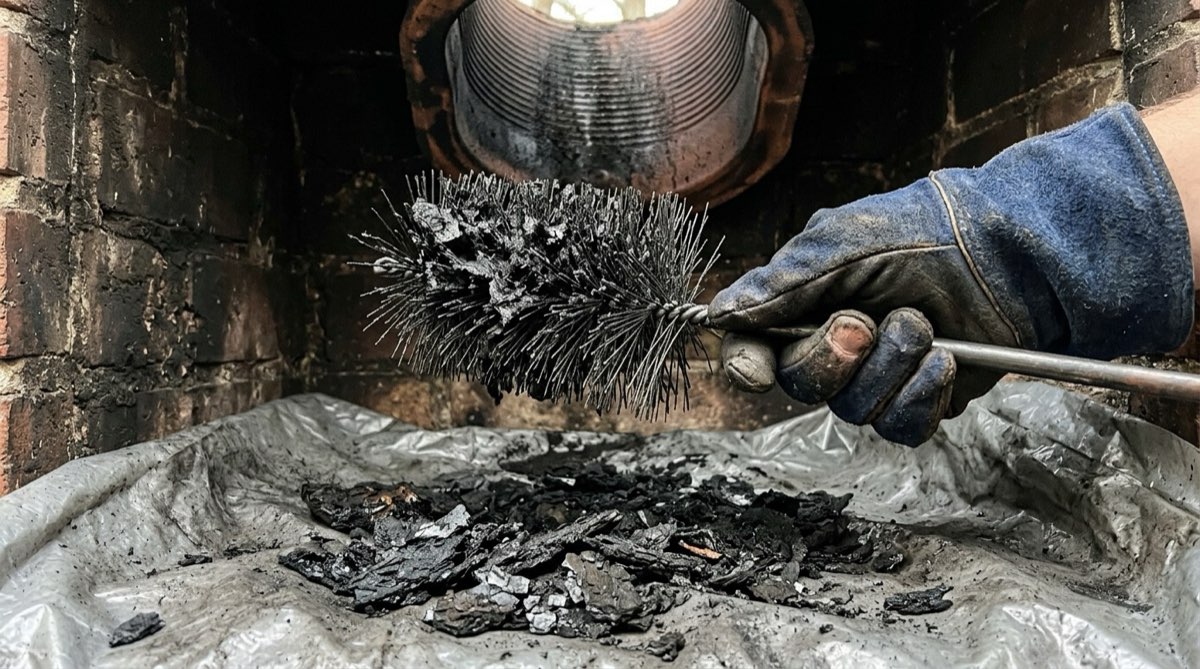
Dusty soot wipes off like chalk — normal wear. Flaky honeycomb crunches and snaps — a heavier cleaning and a hint about burn habits. Glaze looks wet or glassy, black as poured tar — the flammable one, and the one brushes cannot touch.
Resin-rich smoke from soft or damp pine is the express lane to glaze, especially through damped-down overnight stove burns.
Check it yourself tonight
Cold stove or fireplace, flashlight up past the damper or into the stovepipe. Film equals fine; texture equals schedule a cleaning; shine equals stop burning and call this week.
Stove owners get a bonus gauge: door glass that blackens within a burn or two means the fire is running cool and the flue is collecting the evidence.
Draft symptoms
Buildup narrows the pipe. Fires start harder, smoke stalls at the lintel, draft feels lazy on cold mornings when it should be strongest. Black flakes in the firebox or on the stove top mean pieces are already letting go upstream.
Matching removal to stage
Stage one is the annual brush-and-vacuum. Stage two adds passes and elbow grease. Glaze takes rotary chains or a chemical soak over several burns before it surrenders — and afterward, the fix that matters is drier wood and hotter fires, or the glaze rebuilds by February.
Ask for photos up the flue before and after. Two minutes of evidence beats any promise.
The takeaway for pine burners
Film is normal, texture means book the cleaning, shine means stop burning tonight and call. With resinous wood in the mix, run that flashlight check monthly through the burning season, not just in fall.
And treat glaze as a verdict on the fuel, not just the flue: a year of seasoning and hotter fires is what keeps stage three from coming back.